

Research | Innovate | Excel Turning Ideas into Innovation
Transforming data into insights, one algorithm at a time
Featured Research
Discover our most impactful research initiatives.
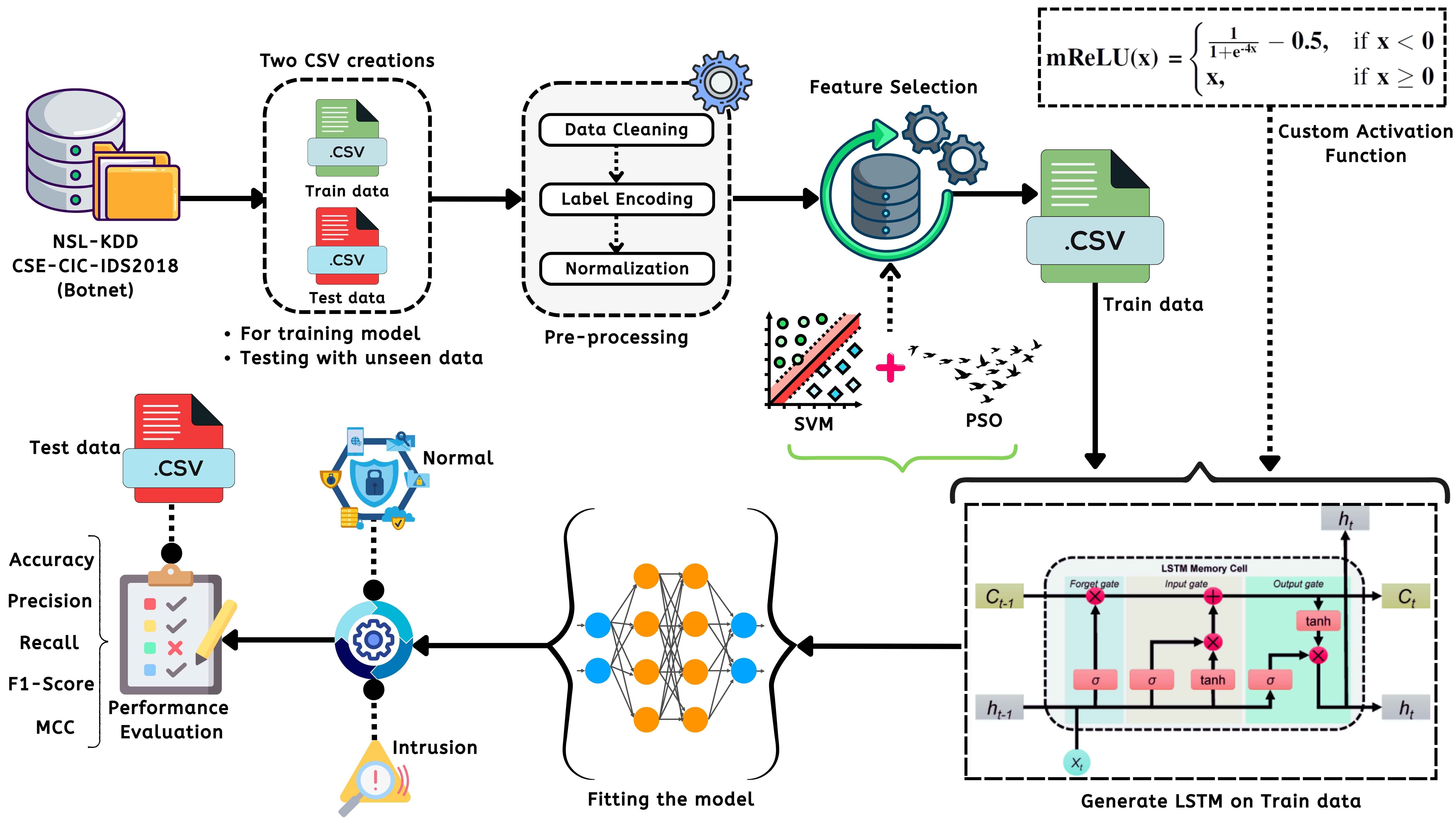
Intrusion Detection Project
Title: Enhancing Intrusion Detection with Image-Based CNN and CTGAN Synthetic OversamplingDescription:This project develops an intrusion detection framework using image-based representations of network traffic and CNN-based classification. The NSL-KDD dataset is transformed into image-like feature representations so that convolutional neural networks can learn spatial patterns from network behavior. To address class imbalance, CTGAN-based synthetic oversampling is used to generate additional minority-class samples. The framework supports five-class intrusion classification and evaluates the effect of synthetic data on detection performance. This project contributes to cybersecurity research by combining tabular-to-image transformation, deep learning, and generative oversampling for more balanced intrusion detection.
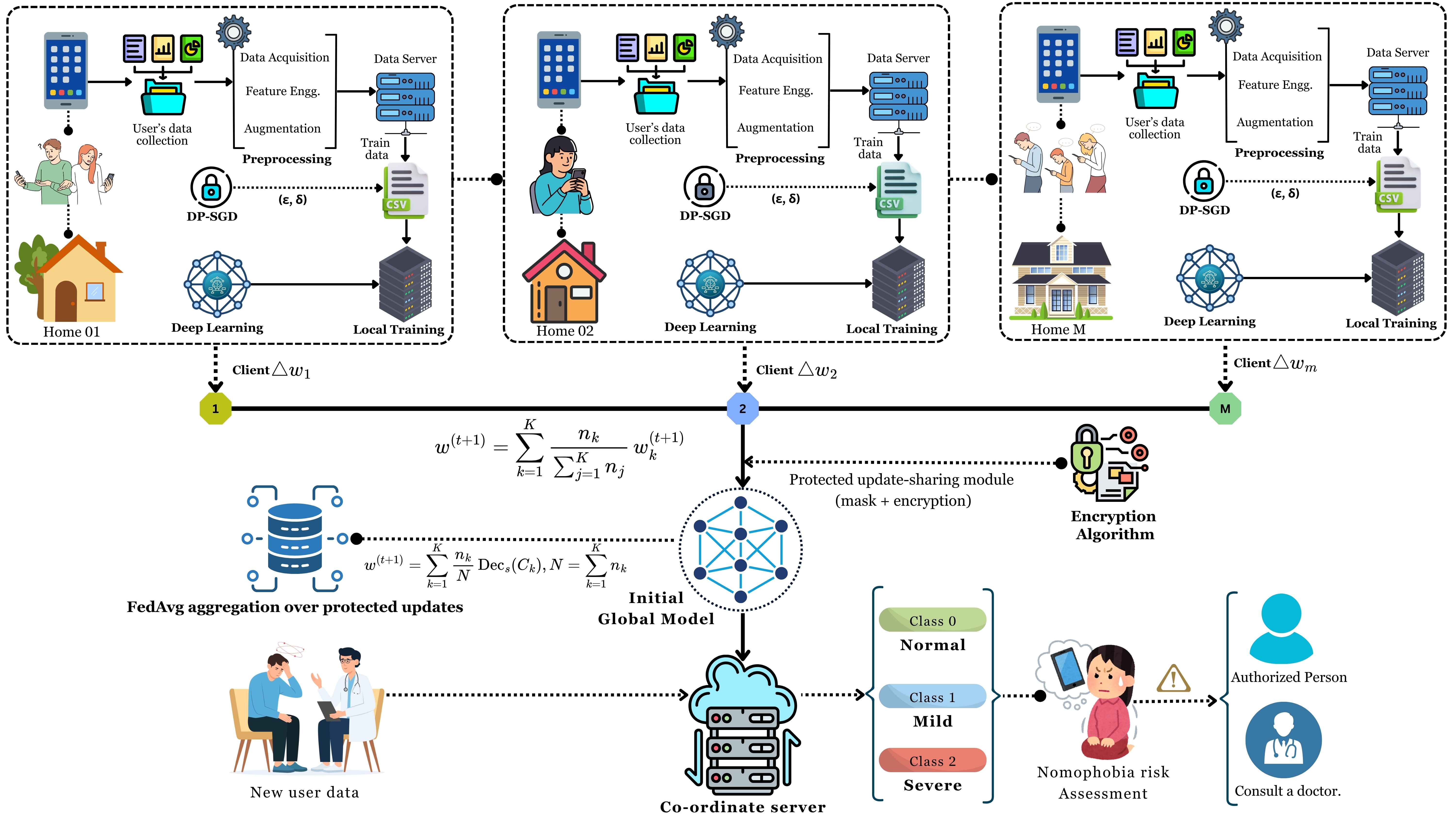
Nomophobia Project
Title: Privacy-Preserving Cascaded Federated Deep Learning for Nomophobia Risk Prediction with Encrypted Masked UpdatesDescription:This project proposes a privacy-preserving federated deep learning framework for predicting nomophobia risk from smartphone usage behavior. The study uses smartphone usage records to construct three risk levels: Normal, Mild, and Severe. A cascaded federated learning pipeline is designed using multiple deep learning models, including MLP, ResMLP, Wide & Deep, TabNet-style gating, CNN, RNN, and LSTM. To protect user data, the framework integrates DP-SGD and encrypted transport of masked model updates. The project also includes privacy accounting, robustness analysis, synthetic-data validation, and leakage-risk analysis. The study presents a proof-of-concept framework for privacy-aware behavioral risk prediction while clearly noting that the labels are constructed from usage features and are not clinical diagnoses.
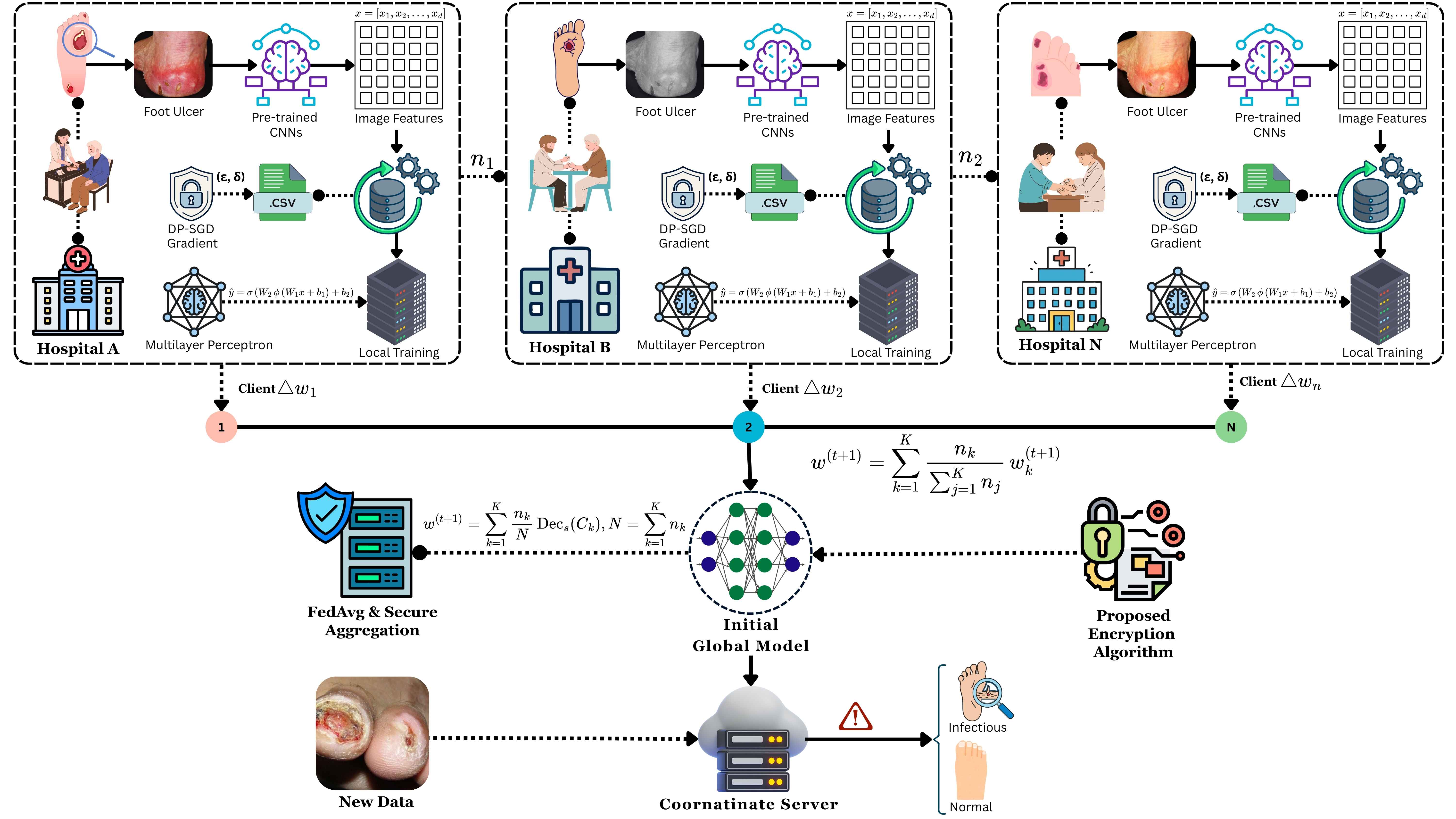
Diabatic Foot Ulcer Diagnosis Project
Title: Backbone-as-Client Federated Learning with Differential Privacy for Diabetic Foot Ulcer Image ClassificationDescription:This project develops a privacy-preserving federated learning framework for diabetic foot ulcer image classification. Instead of sharing raw medical images, pretrained CNN backbones such as VGG19, ResNet50, and DenseNet121 are used as local feature extractors, and only model updates are shared during federated training. The framework combines FedAvg, differential privacy, and protected update transmission to improve data privacy in medical image analysis. The study focuses on binary DFU classification and evaluates multiple MLP-based classification heads under non-IID client settings. This work highlights the potential of federated learning for privacy-aware diabetic foot ulcer screening while acknowledging the need for larger clinical datasets and external validation.
Featured News
Stay updated with our most highlighted activities and announcements.
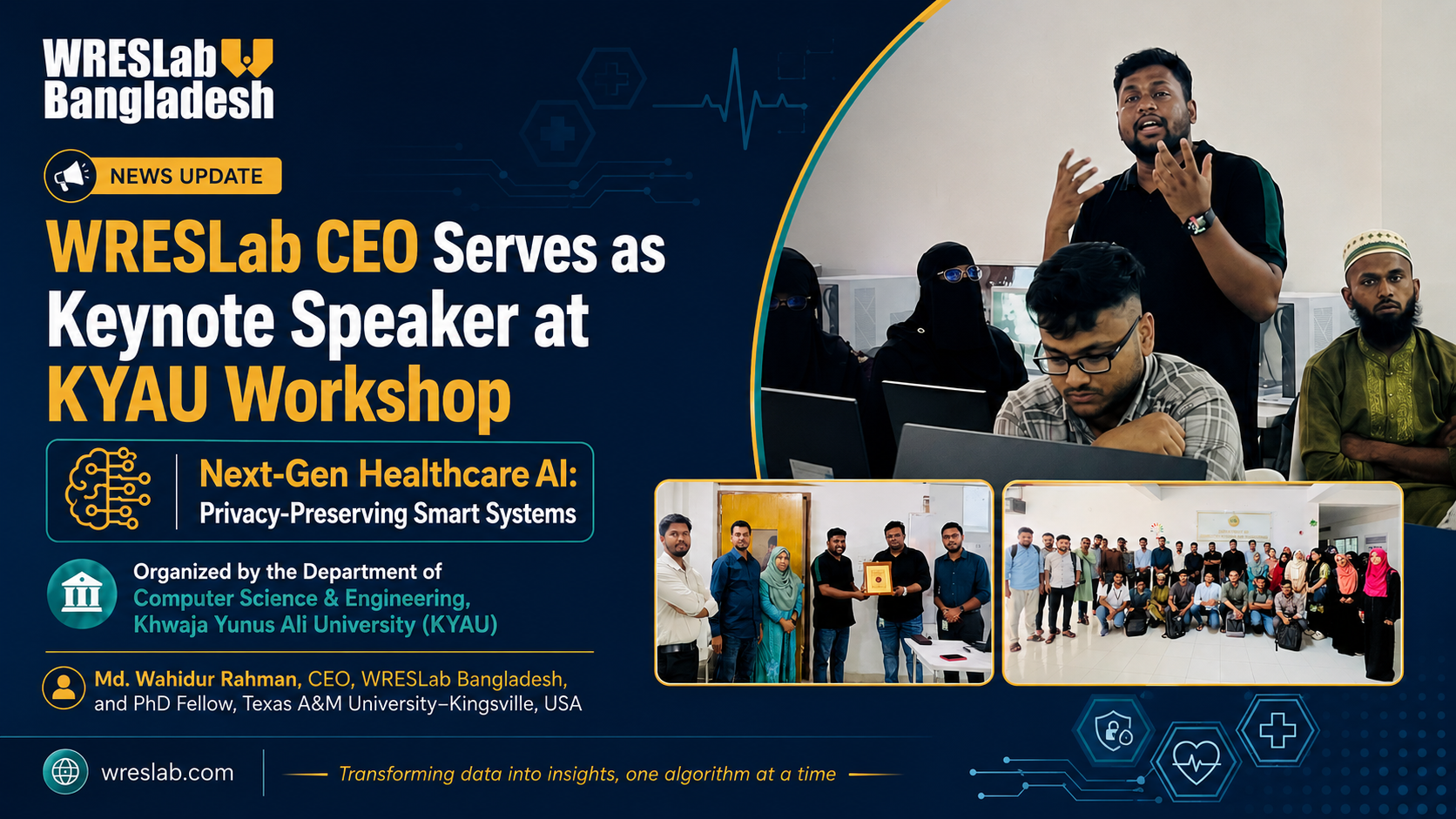
WRESLab Bangladesh CEO Serves as Keynote Speaker at KYAU Workshop on Next-Gen Healthcare AI
WRESLab Bangladesh is pleased to share that Md. Wahidur Rahman, CEO of WRESLab Bangladesh and PhD Fellow at Texas A&M University–Kingsville, USA, served as the keynote speaker at the workshop titled “Next-Gen Healthcare AI: Privacy-Preserving Smart Systems.”The workshop was organized by the Department of Computer Science and Engineering, Khwaja Yunus Ali University (KYAU). The session focused on the growing importance of artificial intelligence in modern healthcare, with special attention to privacy-preserving smart systems, secure medical data analysis, and responsible AI-driven healthcare innovation.During the keynote session, Md. Wahidur Rahman discussed how next-generation AI technologies can support intelligent healthcare systems while protecting sensitive patient information. He highlighted the role of privacy-preserving machine learning, federated learning, smart healthcare monitoring, secure data processing, and AI-based clinical decision support systems. The session also emphasized why privacy, trust, and ethical data handling are essential for the future of healthcare AI.The workshop created an engaging learning environment for students, researchers, and faculty members. Participants gained insights into how AI can be applied to healthcare challenges while maintaining data confidentiality and security. The discussion also encouraged young learners to explore emerging research areas such as medical image analysis, IoT-based healthcare systems, federated learning, deep learning, and privacy-aware digital health solutions.WRESLab Bangladesh is grateful to the Department of Computer Science and Engineering, KYAU, for organizing this meaningful event and for inviting our CEO as the keynote speaker. We also appreciate the warm welcome, recognition, and active participation from the faculty members, students, and organizers.This workshop reflects WRESLab Bangladesh’s continued commitment to advancing research, innovation, and academic collaboration in artificial intelligence, healthcare technology, and privacy-preserving intelligent systems. Through such knowledge-sharing initiatives, WRESLab Bangladesh aims to inspire future researchers and contribute to the development of smart, secure, and impactful AI solutions.Website: wreslab.com
Voices of Excellence
Hear from our collaborators, alumni, and industry partners.
"My six-month journey as a Research Associate at WRESLab Bangladesh was a valuable step in my academic growth. The mentorship, research guidance, and collaborative environment helped me strengthen my skills and prepare for higher studies. I am now continuing my studies at Deggendorf Institute of Technology, Munich, Germany, and I remain grateful to WRESLab Bangladesh for its support and inspiration. "

Razib Debnath
Research Associate
Stay Updated with Our Research
Subscribe to our newsletter to receive the latest news, project updates, and event notifications.